Rubber Extrusions for Medical & Healthcare
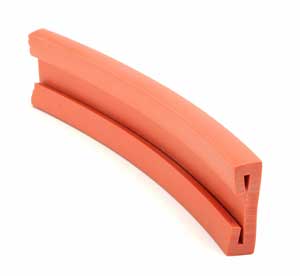
We manufacture high-performance extruded rubber and silicone components for medical device and healthcare equipment OEMs. Our focus is on producing parts that meet stringent sanitation and performance requirements, helping you create safer and more efficient products for the healthcare industry.
Extruded Rubber Components for Medical Devices
Create a safer, more efficient medical environment with high-performance medical-grade silicone and EPDM extrusions from Kismet Rubber Products. As a top manufacturer of rubber and silicone products for the healthcare industry and its suppliers, our team can offer healthcare rubber extrusions to suit your unique needs. We produce custom components for a wide range of specific medical and healthcare equipment, including:
- Seals for diagnostic and imaging equipment (MRI, CT, X-Ray)
- Tubing for peristaltic pumps and fluid transfer systems
- Gaskets for sterilizers and autoclaves
- Profiles for dialysis machines and ventilators
- Bumpers and trim for hospital beds and medical carts
Manufacturing Critical Profiles for Your Medical Application
The performance of a medical device often depends on the reliability of its smallest components. We work with your engineering team to manufacture the precise extruded profiles you require, ensuring they meet tight tolerances and functional demands for maintaining sterility, protecting electronics, or enabling fluid transfer.
Medical Grade Silicone Tubing
Our medical-grade silicone tubing is engineered for fluid transfer, peristaltic pumps, and other applications requiring a high degree of flexibility and biocompatibility. The material resists kinking and can withstand repeated sterilization cycles without degrading.
Seals and Gaskets for Diagnostic and Surgical Equipment
Proper sealing is critical for protecting sensitive electronics and maintaining sterile barriers in medical equipment. We manufacture custom silicone and EPDM gaskets that provide reliable, long-term sealing against fluids, air, and contaminants in device housings and enclosures.
Bumpers and Trim for Medical Carts
We produce durable rubber and silicone bumpers, trim, and edge guards for medical carts and mobile equipment. These components protect both the equipment and the facility from impact damage during daily use.
Our Medical Grade Materials and Compliance
Because sanitation is crucial in medical applications, we manufacture parts to meet key industry specifications to ensure safety for our customers' products. The materials we use can withstand regular cleaning, have a broad chemical compatibility profile, offer low gas permeability, and are resistant to high temperatures and abrasions.
USP Class VI Silicone
For applications with direct patient contact or fluid pathways, we manufacture extrusions using USP Class VI certified silicone compounds. This is the highest level of biocompatibility, ensuring the material has very low toxicity and chemical reactivity.
NSF Certified EPDM
For components that require durability and resistance to cleaning agents, such as seals on equipment housings, we utilize NSF certified EPDM. This material provides excellent performance for parts that must meet sanitation standards but do not have direct patient contact.
Your Partner in Medical Component Manufacturing
As an ISO 9001:2015 registered manufacturer, we are committed to quality and process control. Our team provides design assistance to help you optimize your part for manufacturability and performance. We have the expertise and supply chain network needed to meet your extruded products needs quickly and accurately.
Request a Quote for Your Medical Grade Extrusion
Contact our team to discuss the requirements for your medical device component. Provide your drawings and specifications, and we will develop a quote for a custom extrusion that meets your needs.
FAQs
What does USP Class VI mean?
USP Class VI is a biocompatibility standard from the United States Pharmacopeia for plastic and elastomeric materials. To be certified, a material must pass a series of rigorous biological reactivity tests, including systemic toxicity and implantation. This standard is considered the most stringent of the USP classes and ensures the material has a very low level of toxicity, making it suitable for use in medical devices.
What is the difference between medical-grade silicone and regular silicone?
The primary difference is purity and manufacturing control. Medical-grade silicone is produced using only pure, medical-quality compounds with no fillers or additives that could leach out. In contrast, regular or industrial-grade silicone may contain fillers to reduce cost or alter physical properties. We use true medical-grade compounds to ensure the material purity and safety required for healthcare applications.
Can medical-grade silicone be autoclaved or sterilized?
Yes. Medical-grade silicone has excellent thermal stability and is designed to withstand repeated sterilization cycles. It is compatible with common medical sterilization methods, including steam autoclave, Ethylene Oxide (EtO), and gamma radiation, without significant loss of its physical properties. This makes it an ideal material for reusable medical components.
Can bacteria grow on medical-grade silicone?
Medical-grade silicone is highly resistant to bacterial growth. As an inert, non-porous material, it does not provide any nutrients to support the growth of bacteria or fungi. Its smooth surface is also easy to clean and sterilize, which is why it is frequently specified for applications where hygiene and sterility are critical requirements.
What is the difference between ISO 10993 and USP Class VI?
Both are biocompatibility standards, but they differ in scope and approach. USP Class VI is a specific set of tests, while ISO 10993 is a more comprehensive, risk-based international standard with multiple parts. While many materials that pass USP Class VI may also pass relevant sections of ISO 10993, the two are not directly interchangeable. We can help you select a material that meets the specific compliance requirements for your device's regulatory pathway.